
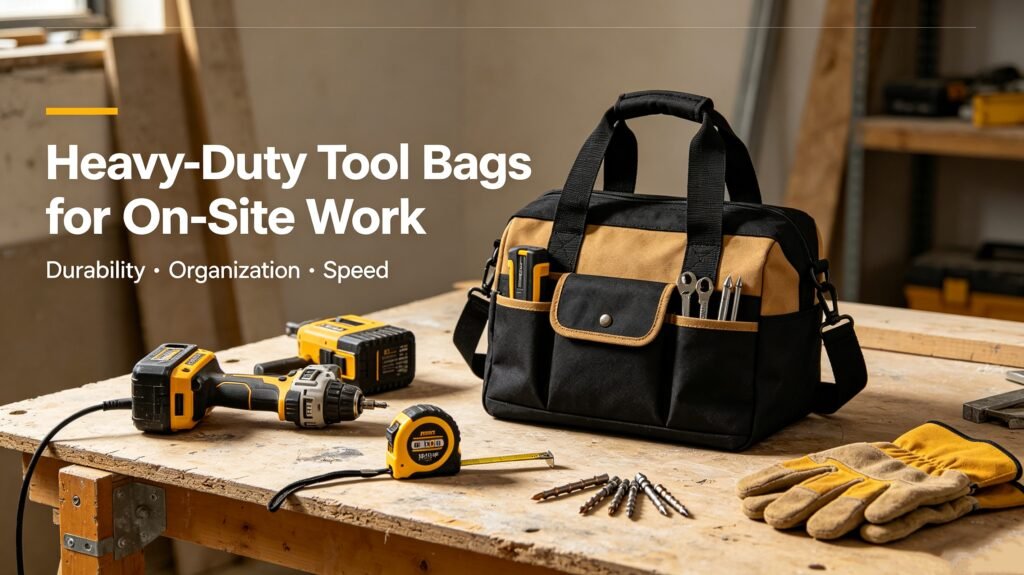
Tool bags serve far more purposes than simple storage containers for trades‑site personnel. A poorly‑constructed gear bag creates workflow interruptions that eat into billable hours across electrical maintenance, construction renovation and field service assignments. Many purchasing teams evaluate tool bags by counting external pockets without examining build details that define long‑term on‑site performance. Field‑ready heavy‑duty tool bags deliver tangible operational gains through targeted structural choices built around real‑world worker movement and daily wear patterns.
Bartack reinforcement stands as one under‑rated feature separating disposable consumer‑grade pouches from work‑focused tool bags. Ordinary straight‑line stitching pulls loose under repeated downward force from heavy wrenches, power‑tool bodies and hardware assortments slung over shoulder straps or carried up ladders. High‑stress connection points including strap anchors, handle bases and compartment dividers receive dense bartack stitching to hold fabric layers together under constant shifting loads. Electrical crews hauling multimeter sets, cable strippers and terminal kits keep complete sets intact through hundreds of daily site transfers without sudden seam failure that scatters small components across job floors. This structural reinforcement eliminates unplanned downtime spent recovering spilled hardware or replacing prematurely broken equipment carriers.
Abrasion‑resistant base fabric directly extends service life for bags exposed to rough job‑site conditions. Canvas‑light materials tear against concrete edges, exposed metal framing and sharp wiring remnants common inside renovation spaces. Heavy‑duty woven polyester or coated oxford fabric resists scuffs, minor punctures and accumulated dirt from outdoor construction yards and industrial plant maintenance zones. Bottom‑layer double‑fabric construction adds another barrier against grinding contact when workers set filled bags directly onto unfinished ground surfaces. Bags built with these material specifications hold consistent shape through months of exposure to dust, moisture and abrasive debris that quickly degrade mass‑market alternatives ordered through general retail channels. Load‑bearing capacity ties closely to both fabric selection and reinforcement work. Well‑engineered tool bags maintain stable geometry under full weight instead of bulging out of shape that hinders stair climbing or vehicle compartment storage.
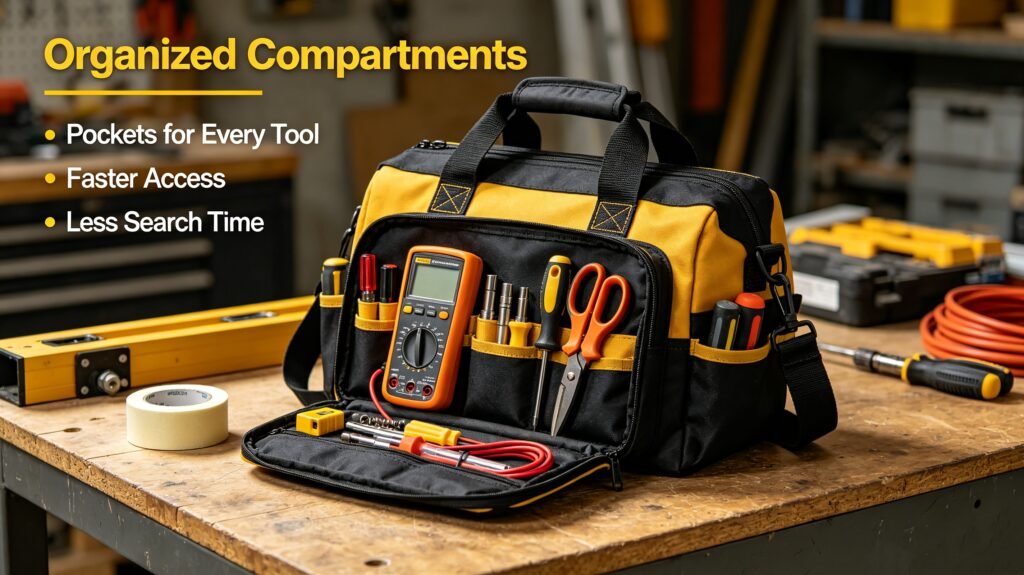
Thoughtful compartment layout streamlines task execution far beyond sheer pocket quantity. Over‑abundant unorganized pockets confuse technicians searching for specific hand tools amid urgent service calls. Purpose‑built internal and external partitions group insulated electrical implements, drill accessories and fastener sets into dedicated zones accessible without full bag unpacking. Working electricians grab insulated screwdrivers or wire cutters in one quick motion while standing on elevated platforms. Well‑defined space allocation lowers mental fatigue during long shift cycles across multiple service locations. Purchasing teams should compare internal layout logic alongside total pocket numbers when reviewing sample units for fleet procurement projects.
Basic routine maintenance preserves functional performance for heavy‑duty tool bags already deployed across field‑worker teams. Surface dust and cement residue wipe away with damp cloth before particles work into stitching gaps and accelerate thread wear. Users empty out accumulated metal shavings and fine debris from inner compartments at the end of each work week to prevent hidden abrasion against inner fabric linings. Operators avoid overloading beyond rated bag capacity even with generous reinforced seam design. Excess weight creates unseen cumulative strain on bartack anchor points over extended use. Bags stay in dry ventilated storage spaces between multi‑day off‑site assignments to reduce mould risk inside fabric layers holding residual moisture from outdoor job‑site exposure. Simple consistent care stretches usable service cycles and lowers repeated replacement expenditure for company‑owned field equipment inventory.
Organizations sourcing gear for multi‑worker fleets face real cost implications from frequent premature tool‑bag replacement. Unit price alone delivers incomplete cost visibility for B‑side procurement decisions. Total ownership costs factor service lifespan, work‑hour loss caused by bag failure and maintenance overhead across full‑team deployment. Procurement specialists test candidate samples under simulated field stress instead of relying purely on product‑page specification lists. Sample units go through repeated load‑bearing cycles and rough‑surface contact trials to replicate daily construction‑site realities.
Organizations sourcing gear for multi‑worker fleets face real cost implications from frequent premature tool‑bag replacement. Unit price alone delivers incomplete cost visibility for B‑side procurement decisions. Total ownership costs factor service lifespan, work‑hour loss caused by bag failure and maintenance overhead across full‑team deployment. Procurement specialists test candidate samples under simulated field stress instead of relying purely on product‑page specification lists. Sample units go through repeated load‑bearing cycles and rough‑surface contact trials to replicate daily construction‑site realities.
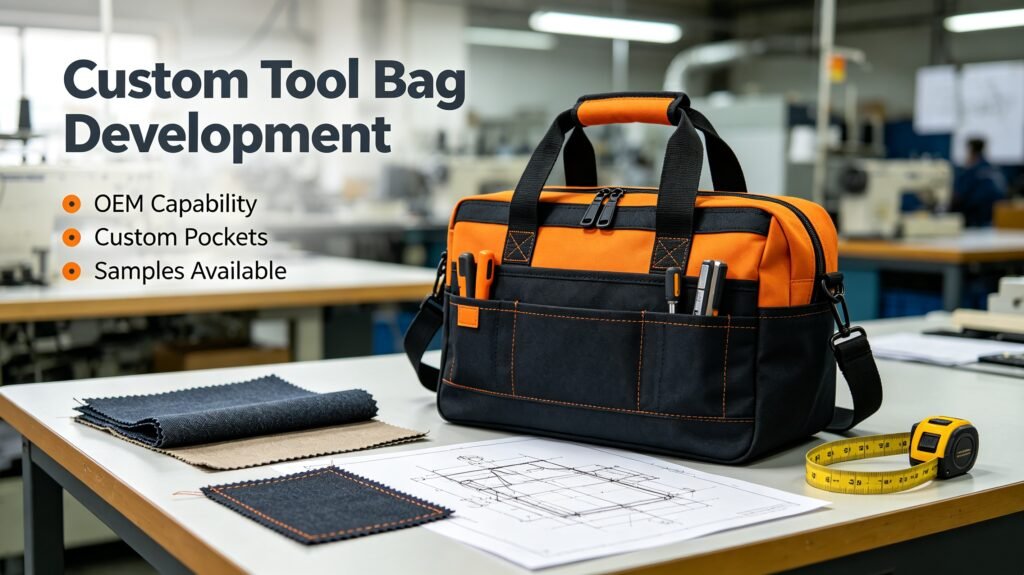
Businesses with unique operational workflows sometimes struggle locating off‑the‑shelf tool‑bag models matching specialized job requirements. Teams handling high‑voltage electrical hardware or specialty mechanical repair kits seek modified partition arrangements, custom handle specifications or adjusted load‑bearing reinforcement. Our manufacturing facility supports flexible OEM custom development for enterprise‑level buyers building tool‑bag solutions aligned to exact field‑team workflows. Customization possibilities cover fabric upgrades, compartment reconfiguration and branding integration without forcing minimum‑order volumes out of practical reach for growing service‑sector businesses. Durable tool‑bag design translates directly to smoother day‑to‑day execution for every technician operating out in the field.