
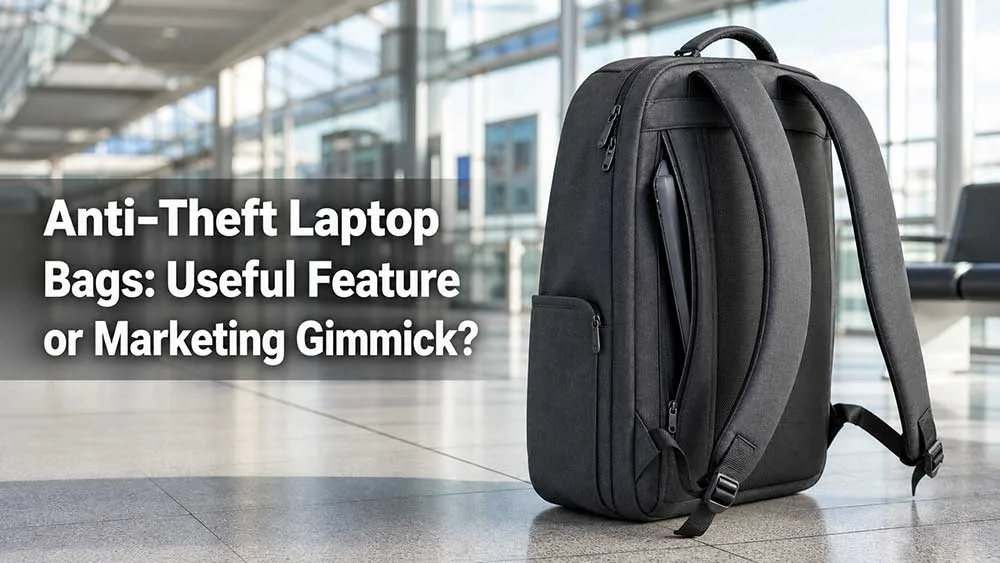
Theft has moved to crowded, distracted environments—airports, subways, tourist districts—where bags get opened or sliced daily. The anti-theft bag category has exploded, but not all products deliver equivalent protection. Understanding the engineering differences separates inventory that sells from inventory that generates returns.
Four features determine real anti-theft performance: fabric resistance to cutting, zipper concealment and access control, RFID blocking against digital theft, and physical locking mechanisms. These form the comprehensive barrier that stops theft attempts.
Fabrics That Resist Blades
Standard nylon offers minimal resistance—a box cutter accesses contents in seconds. Anti-theft fabrics use material selection, weave density, and layered construction.
High-strength synthetics provide baseline protection. Kevlar and UHMWPE deliver serious cut resistance, though with cost and stiffness trade-offs. Composite approaches layer anti-cut mesh or steel wire between base fabrics, slowing cutting attempts while maintaining flexibility. PVC or PU coatings add tear strength and water resistance.
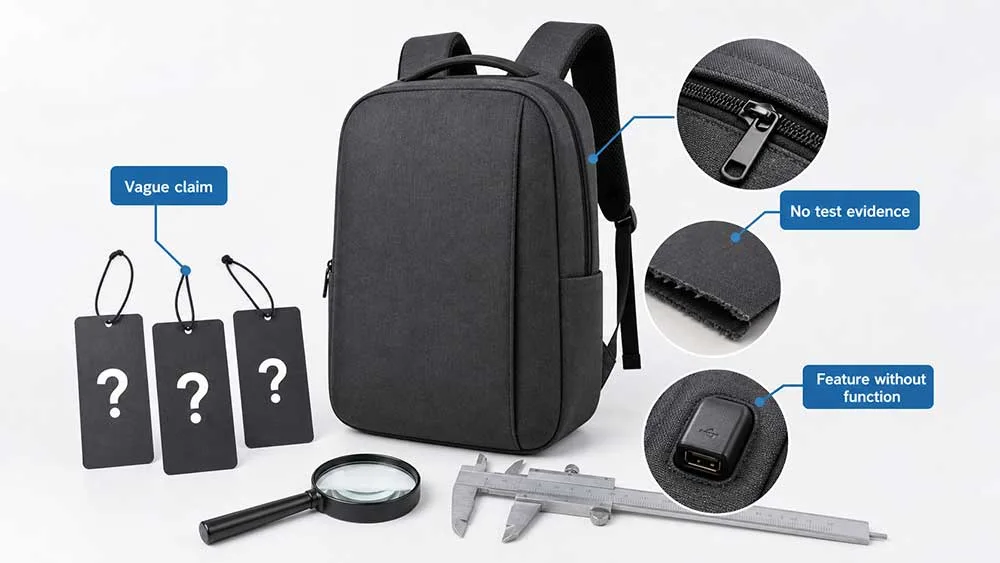
Verify performance through standards: EN 388 for cut resistance, ASTM F1790 for blade penetration, ASTM D1424 and ISO 13937 for tear strength. Request test reports rather than accepting “anti-cut” marketing.
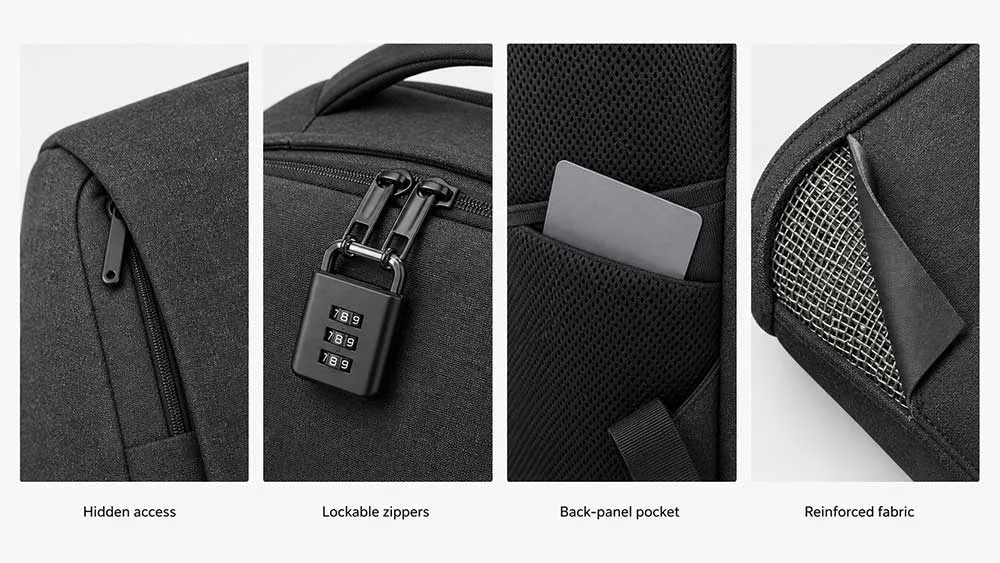
Stress points require reinforcement regardless of base fabric strength. A Kevlar bag with standard stitching at handle attachments fails exactly where thieves target. Hidden anti-cut layers maintain normal appearance; visible mesh signals “valuables inside.”
Zippers: Concealment, Locks, and Clasps
Exposed zippers invite quick-grab attempts. Concealed systems embed zippers within fabric folds or reverse orientation against the wearer’s body. Flap coverage adds seconds to access time and eliminates visual targeting.
Physical locking provides active access control. Lockable zippers integrate combination or key mechanisms directly into slider assemblies. Anti-theft clasps extend this protection: interlocking rings secure multiple zipper pulls together; fixed anchor points enable locking pulls to the bag frame itself. Cable-tethered locks add portable flexibility, allowing bags to be secured to fixed furniture in hostels or cafes. Premium hardware uses zinc alloy or stainless steel—plastic degrades under stress and temperature variation.
Lock placement balances user accessibility with attacker obscurity. Internal mounting prevents forced entry targeting. Premium zippers (YKK, SBS) operate smoothly under concealment friction; cheap hardware jams and creates security gaps.
RFID Blocking: Digital Defense
Physical barriers address visible threats; RFID blocking addresses invisible ones. Contactless payment cards, biometric passports, and transit cards emit radio signals that portable readers capture without physical access—digital pickpocketing operates at several feet in crowded transit.
RFID blocking creates a Faraday cage using conductive nickel/copper fabrics or metallized polyester films at 13.56MHz. Surface coatings degrade with flexing and moisture; integrated woven threads maintain performance through product lifespan. Full enclosure ensures complete isolation; partial coverage leaves dangerous gaps.
Effective blocking demonstrates -30dB attenuation or greater. Request independent test documentation covering compartment scope, durability after simulated use cycles, and frequency range. Strategic placement in dedicated pockets balances security with weight and flexibility—mark these compartments clearly to ensure proper user behavior.
System Integration and Applications
These four systems must coordinate. Cut-resistant fabric with exposed zippers protects against slashing but not picking. Concealed zippers on weak fabric prevent quick access but fail to blades. RFID blocking in easily opened compartments protects cards while leaving passports exposed.
| Environment | Priority Features |
| Urban commuting | Concealed zippers, moderate cut protection, basic RFID |
| International travel | Maximum cut resistance, lockable zippers, full RFID shielding |
| Business settings | Balanced protection, dedicated RFID compartments, professional appearance |
| High-risk tourism | Full cut-resistant construction, multi-point locking, complete RFID enclosure |
Common failures: over-engineered cut resistance sacrificing breathability; concealment complicating legitimate access; poor-quality zippers failing first; partial RFID coverage creating false security; exposed lock mechanisms becoming attack targets.
Verification for Buyers
Fabric: EN 388, ASTM F1790, ASTM D1424, ISO 13937 test reports
Construction: Pull-test handles and stress points
Zippers: Repeated operation under concealment; verify YKK/SBS branding
Hardware: Locking mechanism material specifications; test cable lock tensile strength
RFID: Independent attenuation reports, compartment coverage verification
Integration: Confirm protection doesn’t compromise daily usability
The market rewards genuine security without user burden. Manufacturers balancing appropriate materials, thoughtful zipper and locking engineering, verified RFID protection, and reinforced construction provide defensible inventory. Those cutting corners generate warranty claims and reputation damage.
For buyers developing anti-theft programs: verify materials against standardized threats, ensure zipper/locking systems balance concealment with usability, demand documented RFID effectiveness with appropriate coverage, reinforce inevitable attack points, and maintain practical daily function. Products meeting these criteria protect end users and the commercial relationships depending on their satisfaction.
Our company specializes in manufacturing certified anti-theft bags with verified cut-resistant fabrics, YKK locking zippers, and lab-tested RFID shielding. We provide full material documentation and sample testing support for wholesale buyers. Contact our team to review specifications or request compliance certificates for your market requirements.