
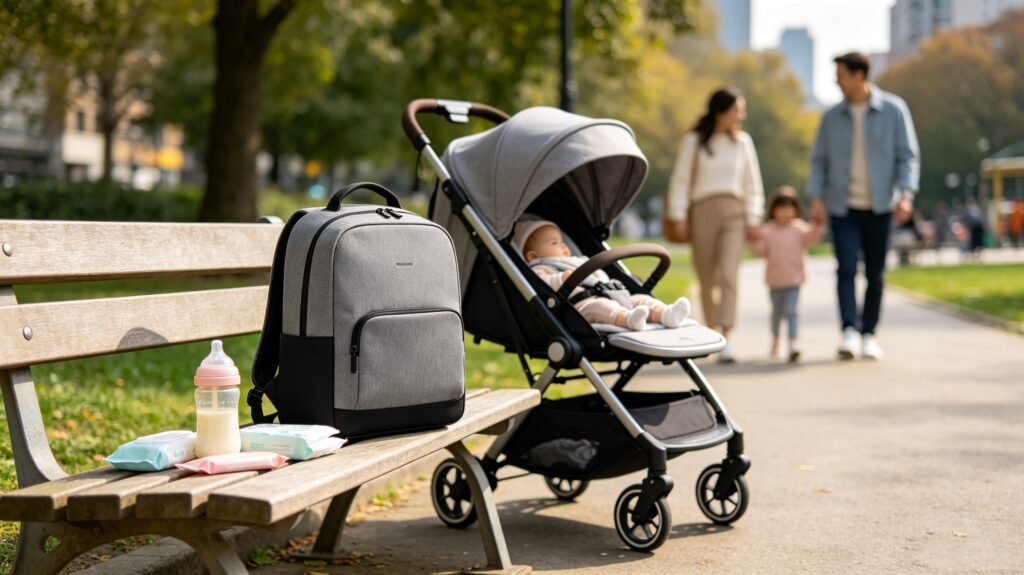
For global luggage and bag suppliers, the US and European diaper bag market remains one of the most stable and opportunityrich segments. Unlike many baby products bought only once, diaper bags are repurchased as families grow, and they are increasingly viewed as everyday gear rather than shortterm accessories.
After analyzing thousands of product reviews, bestseller lists on Amazon US/UK/DE, and feedback from large European retailers, three clear design priorities dominate the Western market: the backpack format, smart interior layouts for multiple children, and reliable stroller attachment systems. This article explains why these three features drive sales, plus additional factors that matter to international buyers.
1. The Backpack Silhouette – Hands Free, Ergonomic, Gender Neutral
In North America and Europe, backpack diaper bags have overtaken totes and messenger styles by a wide margin. According to 2025 market data, backpacks account for 38% to 45% of all diaper bag sales in these regions.
First, handsfree convenience. Parents in the US and EU rarely have livein family help. A typical outing involves pushing a stroller, holding a toddler’s hand, and carrying a baby. A singlestrap bag slides off and causes fatigue. A backpack leaves both hands completely free – to open car doors, pick up a fallen toy, or pay at a checkout.
Second, even weight distribution. Modern diaper bags often carry 4–6 kg of supplies (bottles, wipes, diapers, spare clothes, snacks, a tablet). A backpack spreads this load across both shoulders and the back, preventing pain – a key concern for parents who walk long distances.
Third, genderneutral design. Father involvement in daily childcare is now the norm across the US and Europe. Men will not carry a floral pink tote. Backpack diaper bags with muted colors (black, navy, olive, beige) and clean, sporty lines appeal equally to moms and dads.
2. Interior Layout – Designed for Two (or More) Children
American and European families usually have two or three kids close in age. Without livein grandparents to help, parents often take all children out by themselves. So a diaper bag needs to carry gear for multiple kids, not just one baby.
Here is what that means inside the bag:
No big empty spaces. Parents want dedicated spots: a soft pocket for sunglasses or a phone, two insulated bottle holders (one for warm milk, one for cold water), a mesh pocket for pacifiers, and a separate compartment for wet or dirty clothes.
Right size, not bulky. Around 20–25 liters works best. That holds a full day’s worth for two children – about 6–8 diapers, two outfit changes, snacks, wipes, and a small firstaid kit. Yet it still slides under an airplane seat.
A laptop sleeve (15–16 inches). Many parents work from home or head to a café after daycare dropoff. A padded laptop compartment turns the diaper bag into a workandlife bag.
Easy to clean. Spills will happen. Removable, washable liners or at least a wipeclean polyester interior are expected. Nylon is popular because it is light, waterresistant, and tough.
3. Stroller Hooks & Attachment Systems – A NonNegotiable Feature
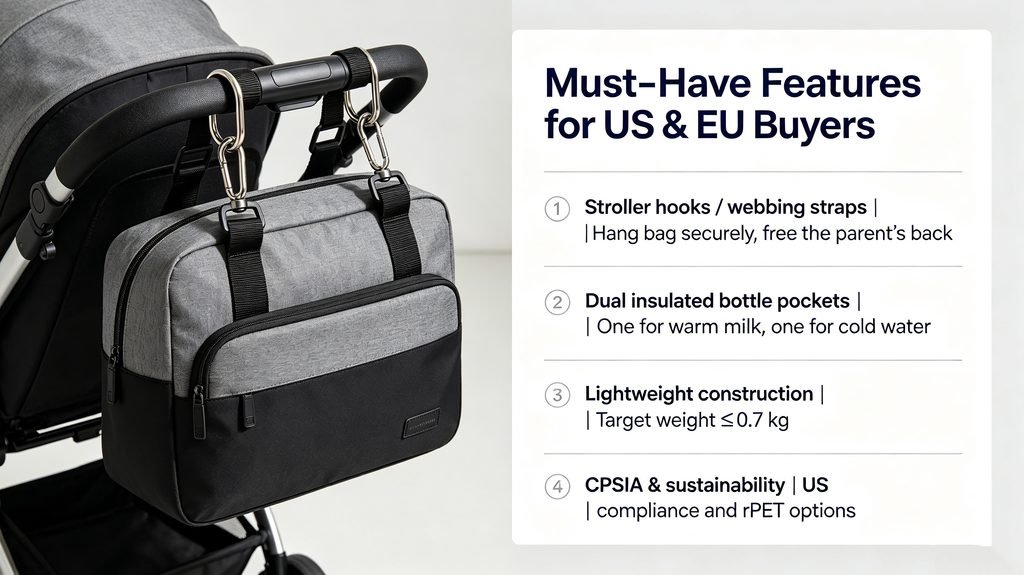
In the US and EU, almost every family owns a stroller. And no parent wants to wear a heavy backpack while already pushing a stroller – it is hot, uncomfortable, and restricts movement. The solution is to hang the diaper bag directly on the stroller handles.
Therefore, stroller attachment systems are not an upgrade; they are a baseline expectation.
Two common designs dominate:
Heavyduty plastic or metal hooks that clip onto standard stroller handlebars. Metal is preferred for durability under heavy loads (up to 57 kg).
Integrated stroller straps – adjustable webbing loops with buckles that wrap around the handlebar. These are quieter and more secure than hooks on bumpy sidewalks.
4. Additional Factors That Matter to Western Buyers
Beyond those three core features, Western buyers also keep an eye on a handful of other practical details.
Weight comes first. Many parents in the US and Europe simply won’t buy a backpack that weighs over 0.7 kg (about 1.5 lbs).
Insulated bottle pockets are a must. At least one, but two is much better. And don’t just claim it keeps milk warm – share real test results.
Quickaccess pockets on the outside. A simple front pocket for keys, a phone, or hand sanitizer.
Safety compliance is nonnegotiable. If you’re selling into the US, you need CPSIA limits on lead and phthalates, plus a valid Children’s Product Certificate. Sustainability is no longer a niche request. European buyers – especially in Germany and Scandinavia – are actively asking for recycled polyester (rPET) or organic cotton exteriors.
5. Turning Design Insights into Reliable Production
Understanding Western design preferences is only half the equation. The other half is having a manufacturing partner capable of delivering these features at scale, with consistent quality and full regulatory compliance.
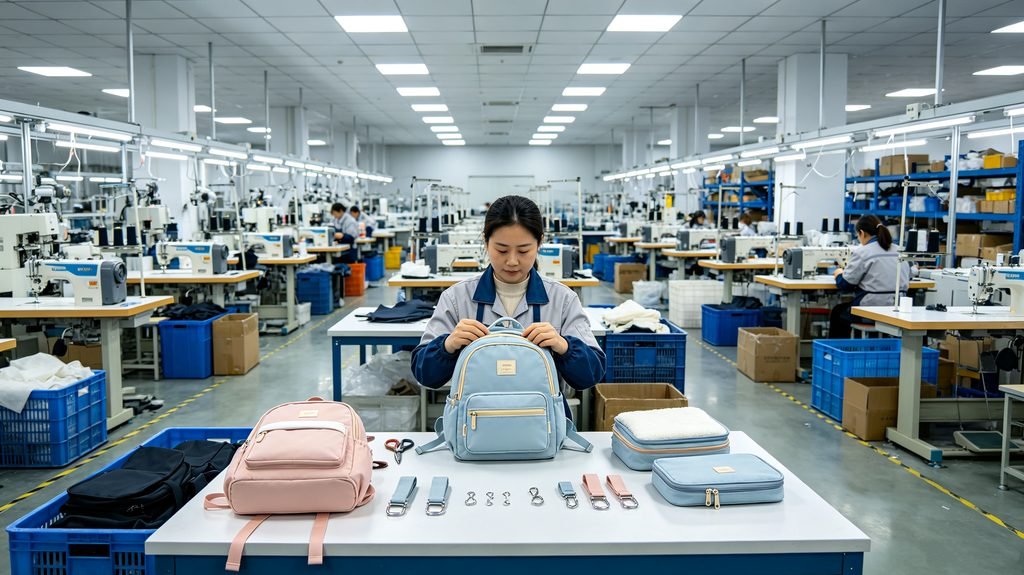
This is where Quanzhou Langmu International Trade Co., Ltd brings clear value. Behind the company stands a 15,000 m² modern factory employing over 300 dedicated staff. The facility operates six conventional production lines alongside nearly 200 sets of advanced automatic equipment – a setup that ensures both high efficiency and rigorous quality control.
Such scale matters for diaper bag production. Multicompartment interiors, stroller hooks, padded straps, and insulated pockets all require precise stitching and reliable component assembly. Automated cutting and sewing reduce human error, while large production capacity allows for consistent lead times even on bulk orders.