
The American Angler: A Different Breed
U.S. fishing enthusiasts spent $7.5 billion on tackle and accessories in 2024, but the psychology differs sharply from European or Asian markets. American anglers don’t just buy bags—they buy systems. A bass tournament angler owns 4-6 specialized bags: crankbait coffins, soft-plastic binders, terminal tackle organizers, each with precise compartment dimensions down to the quarter-inch.
This specificity creates both opportunity and risk for wholesale buyers. The opportunity: premium pricing for purpose-built designs. The risk: one-size-fits-all imports sit on shelves while competitors capture market share with niche specialization.
The Five Bag Archetypes Dominating U.S. Retail
1. The Tournament Pro Coffin
Rigid structure, 3700-series tray compatibility, waterproof base for boat decks. Retail price points $180-350. Requires internal dimensions accurate to 2mm—trays jam or rattle, and anglers return them.
2. The Shore Hiker Backpack
Chest-high wading access, rod tube holders, hydration bladder integration. Fastest-growing segment as bank fishing surges. Weight distribution critical: 30lb loaded capacity with 8-hour comfort.
3. The Kayak-Specific Crate System
Modular insert fitting standard milk crates, bungee integration points, drainage architecture. Explosive growth with 4.2 million kayak anglers in U.S.
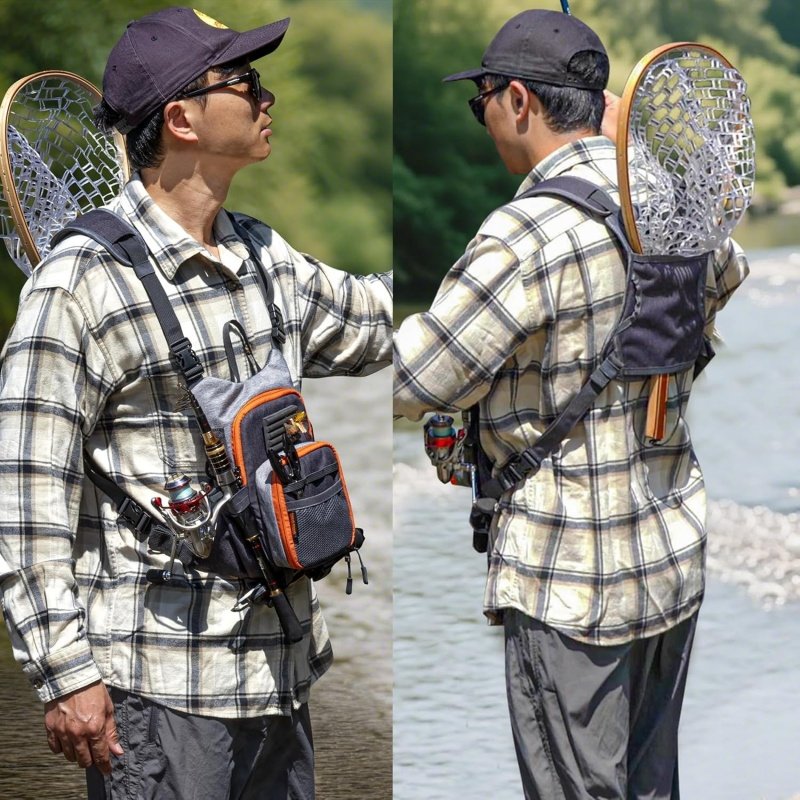
4. The Fly Fishing Sling
Single-strap rotation access, tippet bar organization, magnetic drop zones. Premium segment with 40%+ margins, but requires nuanced understanding of fly angler workflow.
5. The Ice Fishing Bucket
Insulated 5-gallon bucket wrap, tip-up rod holders, sonar unit protection. Highly seasonal with 90-day sales window—inventory velocity is everything.
Where Standard Suppliers Fail
Most overseas factories approach fishing bags as “bags with compartments.” This misses three non-negotiable U.S. market requirements:
Tray Standardization: Plano 3600/3700 and Bass Mafia 3700 trays are industry currency. Bags must accept these precisely. Factories without physical tray samples create dimensional disasters—3mm tolerance errors make trays stick or fall through.
Weatherproofing Hierarchy: “Water-resistant” fails in Florida afternoon thunderstorms or Pacific Northwest drizzle. American anglers expect IPX6+ protection with submersible zippers and welded seams, not coated fabrics.
Ergonomics for Extended Use: Tournament anglers wear bags 10+ hours. Shoulder strap geometry, load distribution, and back panel ventilation separate premium products from discount shelf-fillers.
The Procurement Strategy: From Commodity to Category Captain
Phase One: Tray Compatibility Lock-In
Before design begins, secure physical samples of target tray models. The best manufacturing partners maintain tray libraries—Plano, Bass Mafia, Gamakatsu—and prototype with 3D-printed tray dummies before cutting steel molds. This eliminates dimensional risk at $50 versus $5,000 mold corrections.
Established operations with 19+ years of specialized bag production typically maintain such validation infrastructure, while newer entrants discover tray incompatibility after first production run.
Phase Two: Feature Prioritization by Sub-Segment
| Segment | Non-Negotiable | Negotiable |
| Tournament boat | Rigid structure, tray precision | Aesthetic customization |
| Shore hiking | Suspension system, weight distribution | Color range |
| Kayak | Crate compatibility, drainage | External pocket configuration |
| Fly fishing | Sling rotation, magnetic zones | Material premiumization |
| Ice fishing | Insulation R-value, rod holder spacing | Branding placement |
Phase Three: Seasonal Velocity Engineering
Ice fishing bags must hit distributors by October 1st for November retail set. Miss this window, and inventory sits 11 months. This requires manufacturing partners with true flexible capacity—not theoretical capacity, but demonstrated ability to compress 45-day production to 20 days without quality degradation.
Dual-facility operations with dedicated automation lines and conventional production can dynamically reallocate capacity. Single-facility suppliers face hard constraints during peak season.
The Hidden Cost Killers
Mold Amortization Trap: Fishing bag molds run $8,000-25,000 depending on complexity. Suppliers quoting low piece prices often hide mold costs or amortize across inflated MOQs. Transparent partners separate mold investment from unit pricing, enabling accurate lifetime cost modeling.
Certification Gaps: California Prop 65 compliance for hardware (lead in zippers, phthalates in PVC windows) is non-negotiable. Suppliers without documented supply chain control create liability exposure. Request third-party test reports with lot traceability, not generic compliance letters.
Warranty Cascade: Retailers like Bass Pro and Dick’s Sporting Goods push 2-5 year warranties to suppliers. Without root-cause analysis capabilities, warranty claims become profit erosion. Manufacturing partners with in-house failure analysis and rapid design iteration contain warranty costs at source.
The Verification Roadmap
Before committing production, validate:
Physical Prototyping: Can the factory produce tray-compatible dummies within 72 hours? Delays here predict production timeline risk.
Environmental Testing: Submersion testing to IPX6, UV exposure to 500 hours simulating two seasons, zipper cycle testing to 10,000 operations.
Ergonomic Validation: Loaded wear-testing with 30lb weight for 8-hour simulation, pressure mapping for hot-spot identification.
Supply Chain Transparency: Component traceability to tier-2 suppliers, Prop 65 documentation for all hardware and coatings.
The Strategic Partnership Model
The most successful U.S. wholesale buyers in fishing tackle have shifted from transactional sourcing to category development partnerships. This means:
Shared market intelligence: Manufacturing partners with multi-brand exposure identify cross-category trends (e.g., kayak fishing growth) before individual buyers.
Co-investment in molds: Shared mold ownership reduces buyer capital burden while aligning long-term interests.
Inventory flexibility: Consignment or vendor-managed inventory for seasonal SKUs, converting fixed costs to variable.
This partnership depth requires manufacturing scale and financial stability that 19+ year operations with international brand portfolios can provide, versus newer market entrants focused on transactional volume.
Conclusion: The 2026 Advantage Window
U.S. fishing tackle bags are undergoing premiumization. Discounters struggle with tray compatibility and warranty costs. Category captains capture margin through technical differentiation and retail partnership depth.
The buyers winning this market aren’t optimizing for lowest FOB price. They’re optimizing for dimensional precision, weatherproofing integrity, ergonomic validation, and supply chain resilience—capabilities that separate experienced specialized manufacturers from generalist bag suppliers.
For wholesale buyers ready to move beyond commodity sourcing and establish category leadership, the manufacturing partnership decision in 2026 will determine market position for the next five years.