
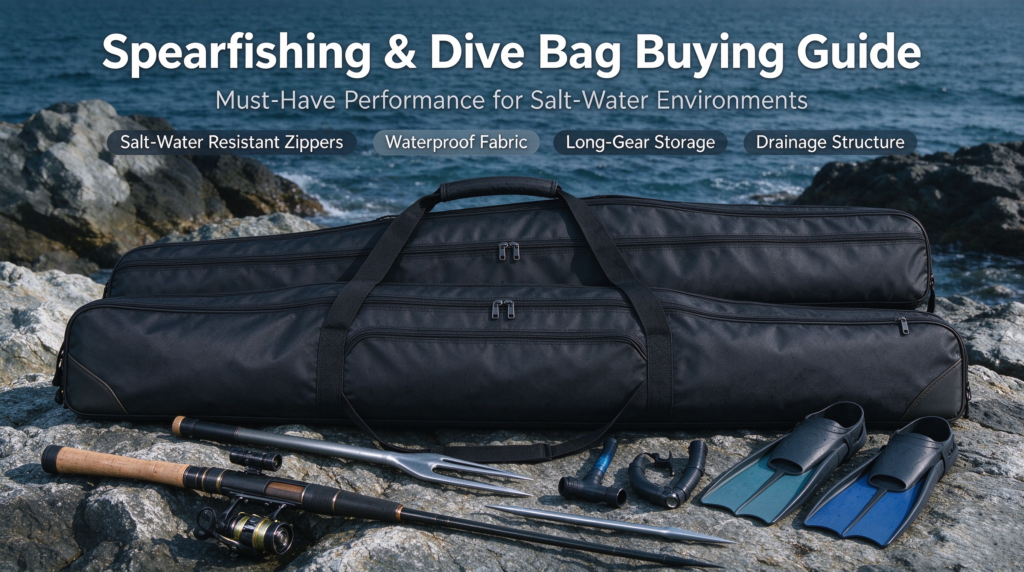
When preparing for spearfishing and open water diving many enthusiasts underestimate the role of their equipment bag. This bag does far more than hold fins masks spearguns and small dive accessories. It acts as the first line of defence for expensive gear against the unique destructive power of saltwater. Salt crystals cling to fabric metal fittings and stitching after every ocean trip. Without proper construction even premium dive equipment suffers accelerated corrosion material degradation and premature failure. A poorly built bag turns every beach cleanup into a tedious battle against trapped brine sand and mildew. Serious divers and spearfishermen need to evaluate specific functional benchmarks before committing to a purchase rather than choosing based only on exterior appearance or price tag.
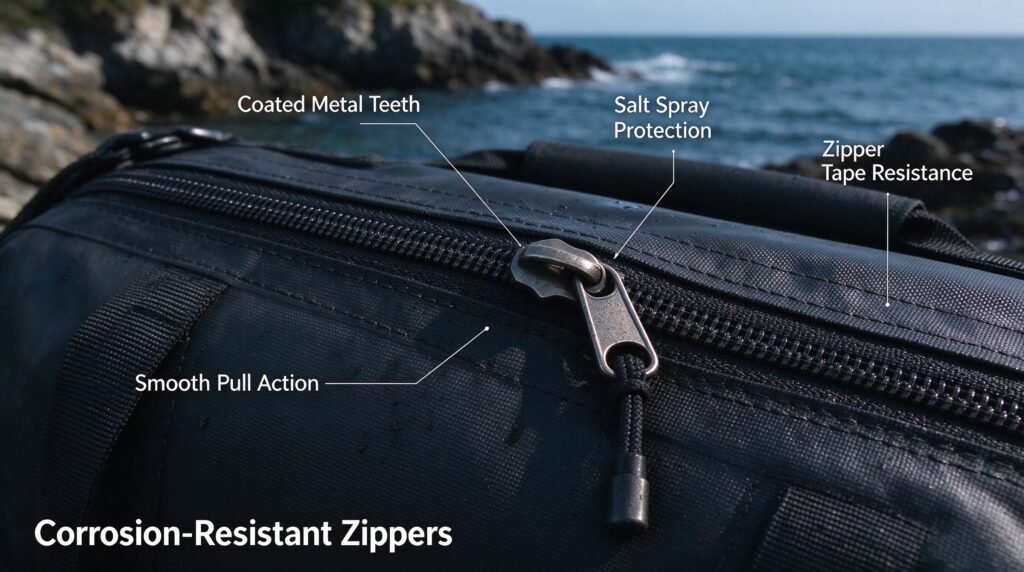
Saltwater resistant zipper quality tops the checklist for any ocean-ready dive or spearfishing gear bag. Standard zippers corrode quickly after repeated contact with seawater and salt spray. Metal teeth lock up with salt residue and plastic sliders crack under heavy sand abrasion. Select bags built with specially coated corrosion-resistant hardware designed to withstand continuous salt exposure. Zipper tape must resist salt absorption and mould growth after extended damp storage. Sealed zipper channels block fine salt particles from settling into internal components during transport. Heavy use on rocky shorelines means zippers also face rough sand scraping. A zipper that fails mid trip traps spearguns fins or dive regulators inside and ruins planned water sessions. Test the zipper pull strength and seal integrity before final selection for regular saltwater expeditions.
Waterproof and salt-resistant fabric forms the second critical performance layer. Ordinary polyester absorbs seawater retains salt and grows mildew inside closed bags. Fabrics for marine use require tight weave structure paired with durable water repellent treatment. This treatment repels surface splash and prevents saltwater saturation during beach transfers and boat rides. Fabric weight balances abrasion resistance against pack weight. Thicker weave withstands scrapes on rocks boat decks and sharp reef edges. Thin lightweight fabrics tear easily under rough handling common in spearfishing environments. The coating must not peel after repeated washing with fresh water. Degraded coating lets salt penetrate fabric fibres to break down stitching over time. Look for material that remains flexible after cycles of salt exposure sun exposure and rinsing. Rigid brittle fabric cracks at seams after months of regular ocean use.
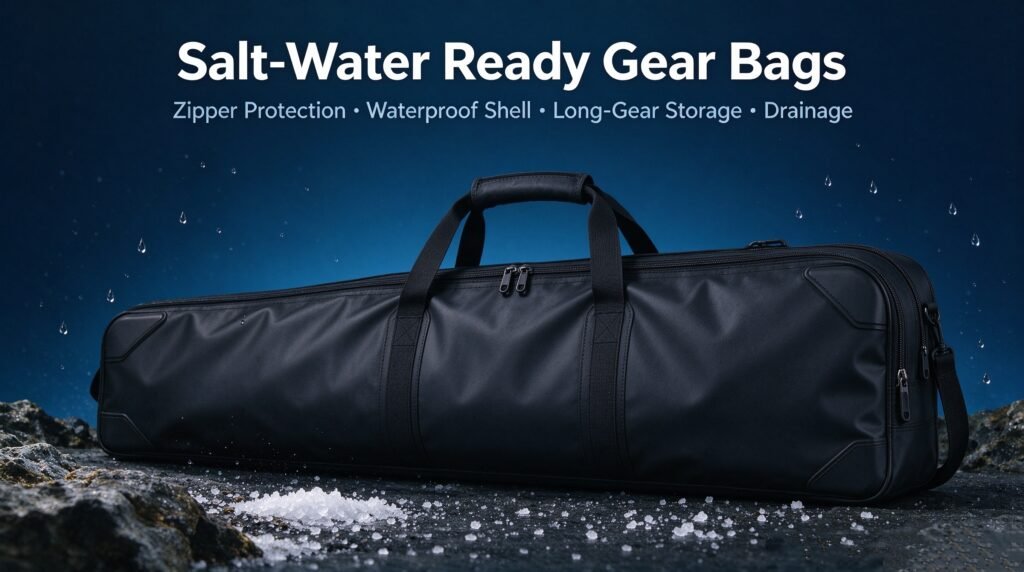
Storage dimension design directly impacts usability for long spearfishing equipment. Many generic gear bags only accommodate short snorkel sets and small accessories. Spearfishing enthusiasts need dedicated elongated compartments for full-length spearguns and break-down spear shafts. Interior layout should separate sharp spear tips fins masks and soft neoprene wetsuits. Dividers prevent scratch damage to dive masks and regulator hoses during transport. Side slip pockets hold small critical items dive knives dive computers or lip balm within quick reach. Overall bag length matches common speargun sizes without forcing users to bend or squeeze equipment. Compression straps secure loose contents during bumpy boat rides. A bag too short for primary spearfishing gear creates permanent stress points on seams and zippers every time it closes.
Effective drainage structure separates marine grade dive bags from regular outdoor storage packs. Trapped saltwater inside sealed bags is one of the biggest causes of gear deterioration. Drain holes placed at low points of the bag flush seawater sand and residual salt after every dive. Mesh panel sections allow continuous airflow to damp wetsuits and neoprene accessories. Fully sealed non-ventilated bags lock moisture inside and create mildew growth within days. Drain channels guide water toward exit points instead of pooling at bottom corners. Reinforced drain openings resist blockage from sand shell fragments and debris picked up at shorelines. Bags without drainage force users to empty every item and hang each piece separately for drying. Built-in drainage cuts post-dive cleanup time and lowers long term maintenance work for all dive equipment.
Field testing these four core features helps buyers filter marketing hype from real world capability. Check zipper function after saltwater exposure. Stretch fabric against sharp edges to test tear resistance. Load the bag with full spearfishing gear and carry it over rocky terrain to evaluate seam strength. Submerge the bottom section briefly to test drainage speed. Many budget bags advertise marine suitability while skipping reinforced corners corrosion proof hardware and proper drain layout. Those products work fine for pool snorkelling but fail rapidly in open saltwater conditions.
Custom sized spearfishing and dive bags can match unique expedition requirements for brands building marine product lines. We produce OEM packs built around these four non-negotiable saltwater performance standards. Fabric selection zipper hardware compartment layout and drain systems adapt to custom specifications from brand development teams. Each design targets real ocean use scenarios to protect expensive dive and spearfishing equipment through repeated saltwater trips.