
A small outdoor brand from Austria once placed a large‑volume backpack order for their summer hiking collection. They wrote “high‑quality oxford fabric” within their product brief and trusted their manufacturer to match the visual samples shared in early communication. Goods arrived ahead of peak selling season and moved fast through their online store. Customer complaints began rolling in within weeks. Backpack shells developed rips along side panels after moderate trail use. Thin un‑specified fabric gave way under packed camping gear. Return requests climbed and negative ratings dragged down the product page search ranking long after the inventory sold through. This real‑world sourcing misstep repeats across countless outdoor wholesale projects. For brand buyers and resellers building outdoor catalogs hiking backpacks remain one of the most consistent high‑demand categories across European, Australian and North‑American markets. Many sourcing teams focus only on capacity appearance and unit price while overlooking fabric specifications that decide real‑world product performance. This 60‑liter trekking backpack demonstrates how thoughtful material selection and practical structural design can create a market‑competitive item for outdoor retailers DTC brands and wholesale distributors.
Compact 60L Dimension and Dual-Function Practical Design
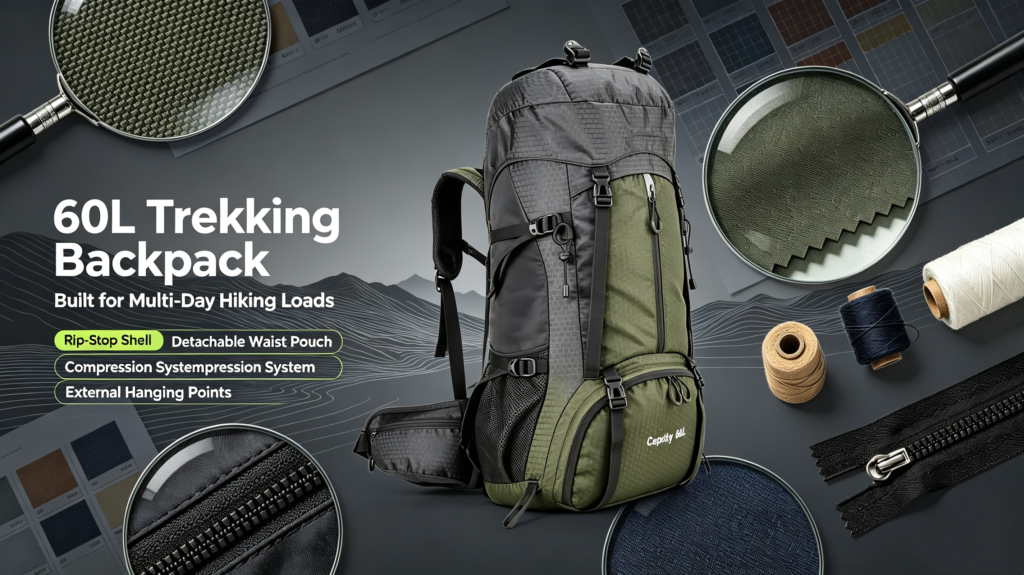
Measuring 33cm × 20cm × 68cm externally this 60L pack targets multi‑day hiking car camping and weekend backpacking trips. It balances large storage volume with manageable outer dimensions so end‑users can pack clothing camping utensils and outdoor essentials without carrying an oversized bulky shell. A detachable waist pouch stands out as one of its most practical selling features. Wearable separately as a fanny pack this small accessory lets hikers store phones keys and small tools without removing the main backpack. This dual‑function detail adds tangible value for consumers and gives sellers a clear talking point against competing basic hiking bags on retail platforms.
Grid Rip-Stop Fabric Solves Traditional Oxford Sourcing Defects
What sets this item apart for experienced buyers lies in its rip‑stop grid jacquard shell. Many new sourcing teams make a common industry mistake requesting “oxford fabric” without defining weave type denier count and base material. Simply naming a fabric family leaves too much room for inconsistent factory interpretation. Some suppliers substitute thin low‑denier material that visually resembles heavy‑duty textile but fails under real trail conditions. Tears yarn slippage and fast surface wear appear after short‑term customer use leading to return rates and negative product reviews that hurt brand reputation.
Performance Benefits Of Grid‑Pattern Rip‑Stop Polyester Shell
This backpack uses grid‑pattern rip‑stop polyester fabric built to resist tearing from sharp branches rough rock surfaces and heavy internal loads. The grid weaving reinforces every section of the shell if a small scratch occurs damage will not spread rapidly across the whole panel. The fabric receives standard PU water‑repellent treatment handling light rain and morning dew during outdoor activities. It will not stand for long‑term full submersion this reasonable positioning for general‑purpose hiking gear avoids misleading end‑user expectations.
Practical Structural Features Boost Real‑World Usability
Structural details further lift its commercial appeal. Multiple compression straps run over front and side panels. Hikers can tighten these webbing systems to shrink down uneven loosely packed loads stabilizing weight against the user’s back and reducing swinging while walking. Dual side mesh pockets hold water bottles or foldable gear. Heavy‑duty plastic buckles secure compartments and adjustment points with reinforced bartack stitching on every high‑stress position including strap joints and attachment loops. External hanging points allow users to fasten trekking poles or extra camping equipment expanding carrying flexibility without consuming inner storage space.
Ergonomic Carry‑System Reduces End‑User Fatigue
Its ergonomic carrying system deserves attention for retail performance. Thick padded shoulder straps and ventilated back panel ease pressure for long‑distance trekking. The broad waist belt transfers most pack weight to the user’s hips a critical feature for 60‑liter large‑volume gear. Cheap alternatives skip sufficient foam padding resulting in sore shoulders and poor customer feedback once end‑users load the bag to full capacity.
For international buyers fabric specification discipline matters greatly when placing bulk orders. When you source this style or similar outdoor backpacks avoid vague descriptions such as “good quality oxford material”. Your tech pack should clearly state denier rating weave construction base fiber and coating requirements. Always request physical fabric swatches for pre‑production confirmation. Testing sample material for tear resistance and water repellency before mass production prevents costly post‑shipment complaints.
This 60L hiking backpack fits well for DTC outdoor stores marketplace sellers and gear retailers seeking reliable mid‑range trekking equipment. It combines crowd‑pleasing practical functions with solid material foundations. Buyers can customize logo printing fabric denier upgrade and color options to match brand positioning. With clear technical requirements communicated to your manufacturer you can bring this competitive outdoor product to your market minimizing typical fabric‑related sourcing risks.